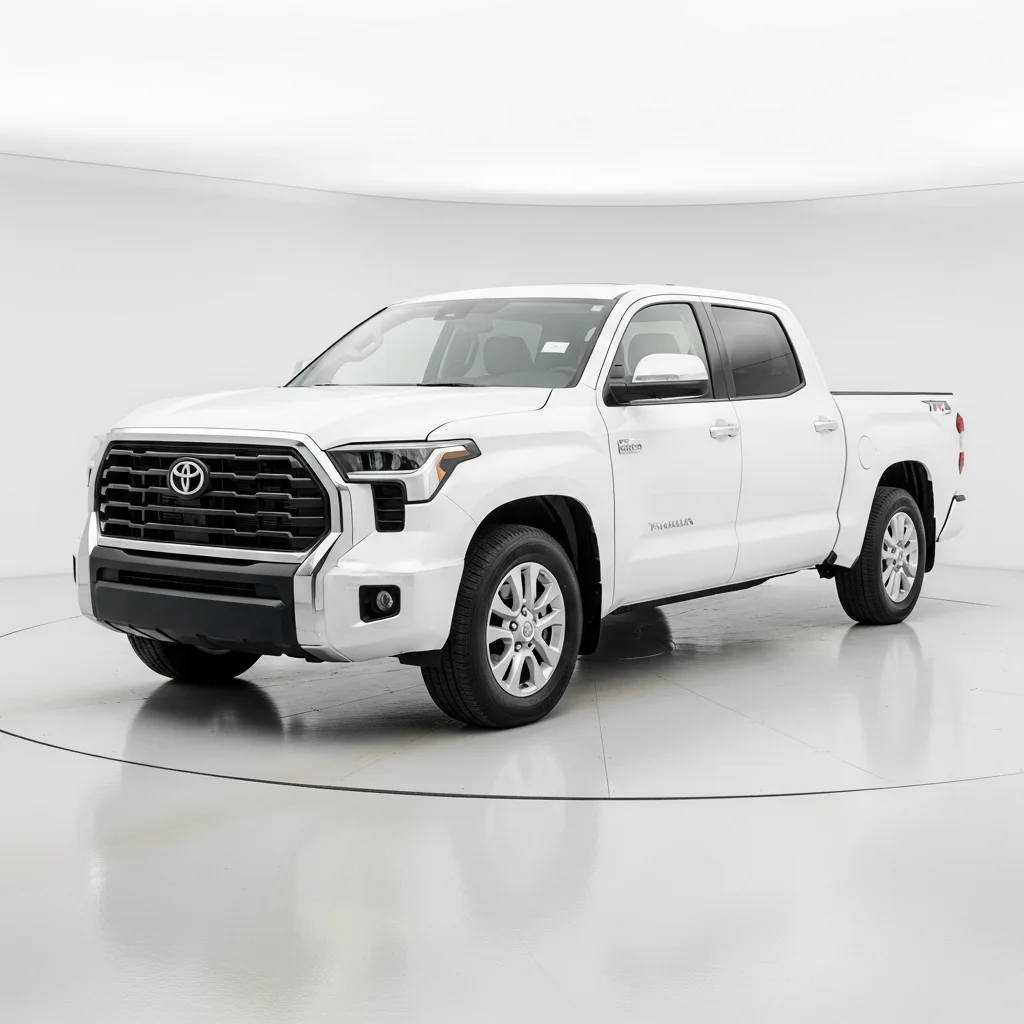
Key Takeaways
- The Tundra traded its V8 for a twin-turbo V6 with available hybrid — the i-FORCE MAX delivers V8 torque with significantly better fuel economy
- Powertrain: 3.4L twin-turbo V6, 389 hp (i-FORCE MAX hybrid: 437 hp), achieving 20 combined (V6); 22 combined (hybrid) mpg
- Starting MSRP around $40,000 — positioned against the Ford F-150, Chevrolet Silverado, Ram 1500
- New for 2025: Updated multimedia system, improved towing features, new TRD Pro updates
- Our pick: Limited i-FORCE MAX for the ultimate luxury truck experience; TRD Pro for off-road
Overview
The Tundra traded its V8 for a twin-turbo V6 with available hybrid — the i-FORCE MAX delivers V8 torque with significantly better fuel economy. The Tundra enters 2025 with meaningful updates: updated multimedia system, improved towing features, new trd pro updates. In a full-size truck segment that's never been more competitive, the Toyota Tundra distinguishes itself through a specific combination of qualities that its competitors can't quite replicate.
Starting around $40,000, the Tundra competes directly against the Ford F-150, Chevrolet Silverado, Ram 1500. Each of those competitors brings genuine strengths to the table, but the Tundra carves out its own niche by delivering The Tundra traded its V8 for a twin-turbo V6 with available hybrid. Whether that resonates with you depends on what you prioritize in a full-size truck.
What's New for 2025
Updated multimedia system, improved towing features, new TRD Pro updates. These aren't just checkbox updates — Toyota has addressed real owner feedback and competitive gaps with these changes. The result is a Tundra that feels more complete and contemporary than the outgoing model in ways you'll notice daily.
Powertrain and Driving Experience
Under the hood, the Tundra runs 3.4L twin-turbo V6, 389 hp (i-FORCE MAX hybrid: 437 hp). In practice, this powertrain delivers smooth, predictable power for daily driving with enough reserve for confident highway merging and mountain passes. The transmission calibration prioritizes smoothness over sportiness in normal driving, saving the sharper responses for when you request them.
Fuel economy lands at 20 combined (V6); 22 combined (hybrid) — competitive for the full-size truck segment and achievable in real-world driving without hypermiling techniques. On a mixed highway/city commute, expect numbers close to the EPA estimate, which is more than some competitors can claim.
The chassis tuning strikes a balance between comfort and control. Road imperfections are absorbed without harshness, while highway stability inspires confidence at speed. The steering is well-weighted with a natural on-center feel. Body roll is managed well through sweeping highway ramps and parking lot maneuvers. This isn't a sports car, but the Tundra never feels sloppy or disconnected.
Interior, Comfort, and Cargo
Inside, the Tundra presents a cabin that reflects Toyota's current design philosophy. Materials quality is appropriate for the $40,000 price point — you'll find soft-touch surfaces where your hands naturally rest, and the overall assembly quality suggests this cabin will hold up well over years of daily use. The driver's seat offers good support for commutes and road trips, with enough adjustability to accommodate a wide range of body types.
The infotainment system centers on a touchscreen with wireless Apple CarPlay and Android Auto integration. Response times are acceptable, menu structures are logical, and the most-used functions are accessible within one or two taps. A physical volume knob is present — a small detail that matters more than you'd think in daily driving.
Rear-seat space is competitive for the full-size truck segment. Two adults can ride comfortably on typical trips, and the rear doors open wide enough for easy child seat installation. Cargo space handles the daily demands of this vehicle's likely buyers — grocery runs, weekend gear, and occasional larger items with the rear seats folded.
Technology and Safety
Standard equipment includes Toyota's latest driver-assistance suite: automatic emergency braking with pedestrian and cyclist detection, lane-keeping assist with lane centering, adaptive cruise control that works in stop-and-go traffic, and automatic high beams. These systems work unobtrusively in daily driving, providing a genuine safety net without constant false alerts or aggressive interventions.
Available technology upgrades include a larger touchscreen, premium audio, wireless charging, a head-up display, and enhanced surround-view camera. Higher trims add features like ventilated seats, a panoramic roof, and additional USB charging ports for rear passengers. Over-the-air updates keep the software current without dealer visits.
Pricing, Trims, and Value
The Tundra lineup starts around $40,000 for the base trim, which comes well-equipped with the full safety suite, smartphone integration, and modern infotainment. Mid-range trims add comfort and convenience features that most buyers will want — heated seats, a power liftgate (on SUVs), and upgraded audio typically live in this range.
Against the Ford F-150, Chevrolet Silverado, Ram 1500, the Tundra holds its own on features per dollar. The key question isn't whether the Tundra is a good value — it is — but whether its specific blend of strengths aligns with your priorities.
Our recommendation: Limited i-FORCE MAX for the ultimate luxury truck experience; TRD Pro for off-road. This configuration hits the sweet spot of features, capability, and price, delivering the core Tundra experience without pushing into diminishing-returns territory at the top of the lineup.
How It Compares
The full-size truck segment is stacked with strong competitors. Here's how the Tundra stacks up against its main rivals:
Against the Ford F-150: the Tundra offers better value and reliability, while the Ford F-150 counters with its own set of strengths. Cross-shop both before deciding.
Against the Chevrolet Silverado: different strengths play to different buyer priorities. Test drive both and see which cabin, driving feel, and feature set resonate with your daily needs.
Verdict
The 2025 Toyota Tundra is a well-executed full-size truck that earns its place on any buyer's short list. The Tundra traded its V8 for a twin-turbo V6 with available hybrid — the i-FORCE MAX delivers V8 torque with significantly better fuel economy. That's a specific, compelling argument that not every competitor can match.
Buy the Tundra if you value what Toyota does best and want a full-size truck that handles daily life with competence and character. The Limited i-FORCE MAX trim delivers the core experience.
Look elsewhere if you prioritize maximum sportiness (cross-shop the Ford F-150), the absolute lowest price in the segment, or a fundamentally different set of priorities than what the Tundra offers.