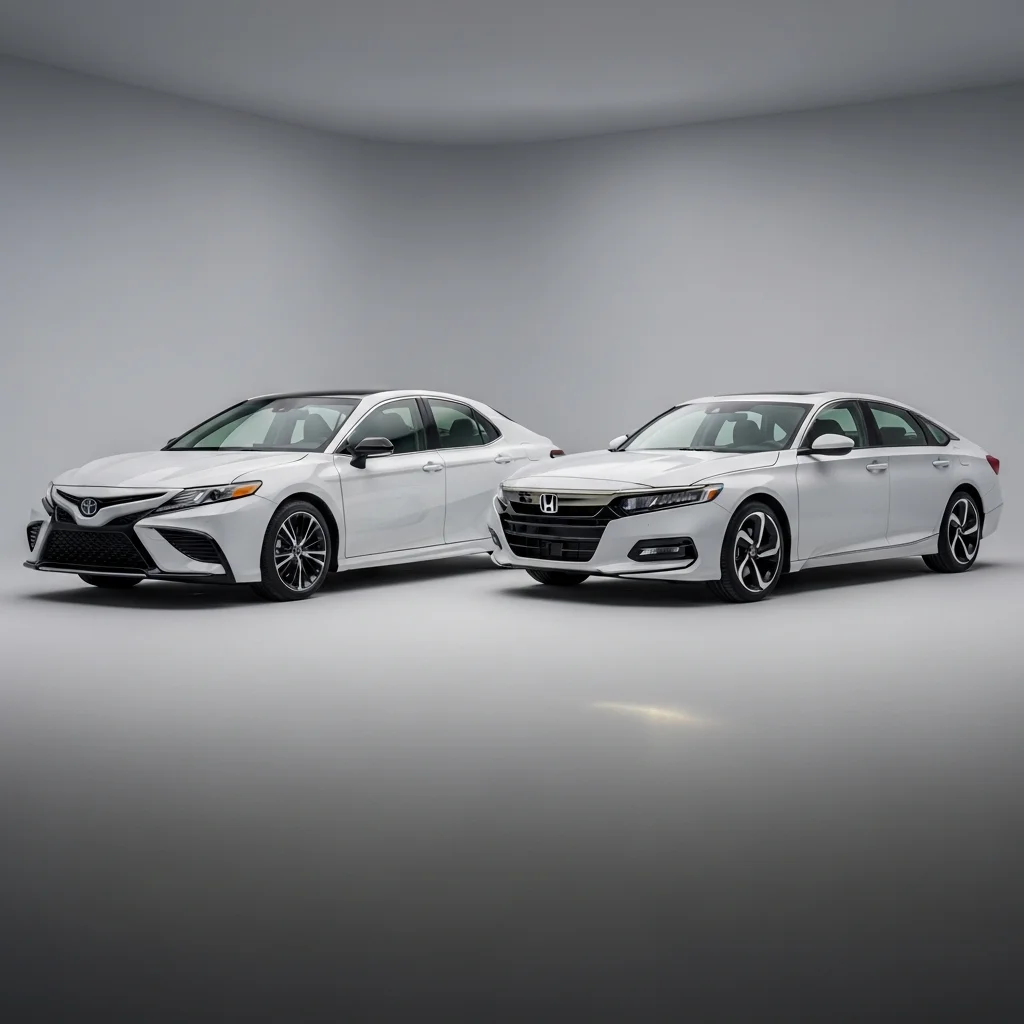
Key Takeaways
- Both the 2025 Toyota Camry and Honda Accord are excellent midsize sedans — this comparison helps you find which one fits YOUR priorities
- Toyota Camry strengths: best-in-class 47 mpg hybrid, strongest resale value
- Honda Accord strengths: sportier driving feel, more premium interior materials
- Neither is objectively "better" — the right choice depends on what you value most in daily driving
Overview
The Toyota Camry and Honda Accord represent two of the strongest options in the midsize sedan segment. If you're cross-shopping these two, you already have good taste — both deliver genuine quality and competence. The question isn't which one is good (they both are), but which one aligns with how you'll actually use it daily.
Toyota Camry: What It Does Best
The Toyota Camry's core argument is best-in-class 47 mpg hybrid, strongest resale value. In daily driving, this translates to a vehicle that feels confident and purposeful. The interior is well-assembled with materials that reflect the price point, and the technology suite is comprehensive without being overwhelming.
Where the Camry pulls ahead of the Accord: best-in-class 47 mpg hybrid, strongest resale value. These aren't marginal differences — they're meaningful advantages that you'll notice in the first week of ownership and continue to appreciate over years of daily use.
Honda Accord: What It Does Best
The Honda Accord counters with sportier driving feel, more premium interior materials. This is a vehicle that knows its strengths and plays to them consistently. The driving experience is tuned to match its target buyer's expectations, and it delivers on its promises without asterisks.
Where the Accord leads: sportier driving feel, more premium interior materials. If these priorities rank highest on your list, the Accord is the better choice — and it's not close in these specific areas.
Interior and Technology
Both vehicles offer modern infotainment with wireless Apple CarPlay and Android Auto, comprehensive safety suites, and comfortable seating for daily commutes. The differences come down to design philosophy, materials choices, and the specific tech features each brand prioritizes.
Spend time in both cabins before deciding. Photos don't capture the feel of materials under your hands, the sound of the doors closing, or how the driver's seat supports your specific body type on a 30-minute drive.
Safety
Both the Toyota Camry and Honda Accord come standard with comprehensive driver-assistance suites including automatic emergency braking, adaptive cruise control, and lane-keeping assist. Safety technology has converged significantly in this segment — both vehicles provide strong protection without meaningful gaps.
Value and Ownership Costs
Compare more than the window sticker. Factor in projected resale value (which affects total cost of ownership significantly), insurance costs for your specific profile, expected maintenance intervals, and fuel costs based on your actual driving patterns. A vehicle that costs $2,000 more but holds $4,000 more value in three years is actually cheaper to own.
Our Verdict
Choose the Toyota Camry if you prioritize best-in-class 47 mpg hybrid. The Camry excels here in ways the Accord doesn't match.
Choose the Honda Accord if you prioritize sportier driving feel. The Accord's advantage in this area is genuine and meaningful.
Can't decide? Test drive both on the same day, on the same route. Drive your actual commute, park in your actual garage, load your actual cargo. The right choice usually becomes clear when you stop comparing specs and start comparing experiences.